绝代双骄
Will US efforts to deescalate the Israel-Hamas conflict be effective? Experts weigh in_我的网站

A |
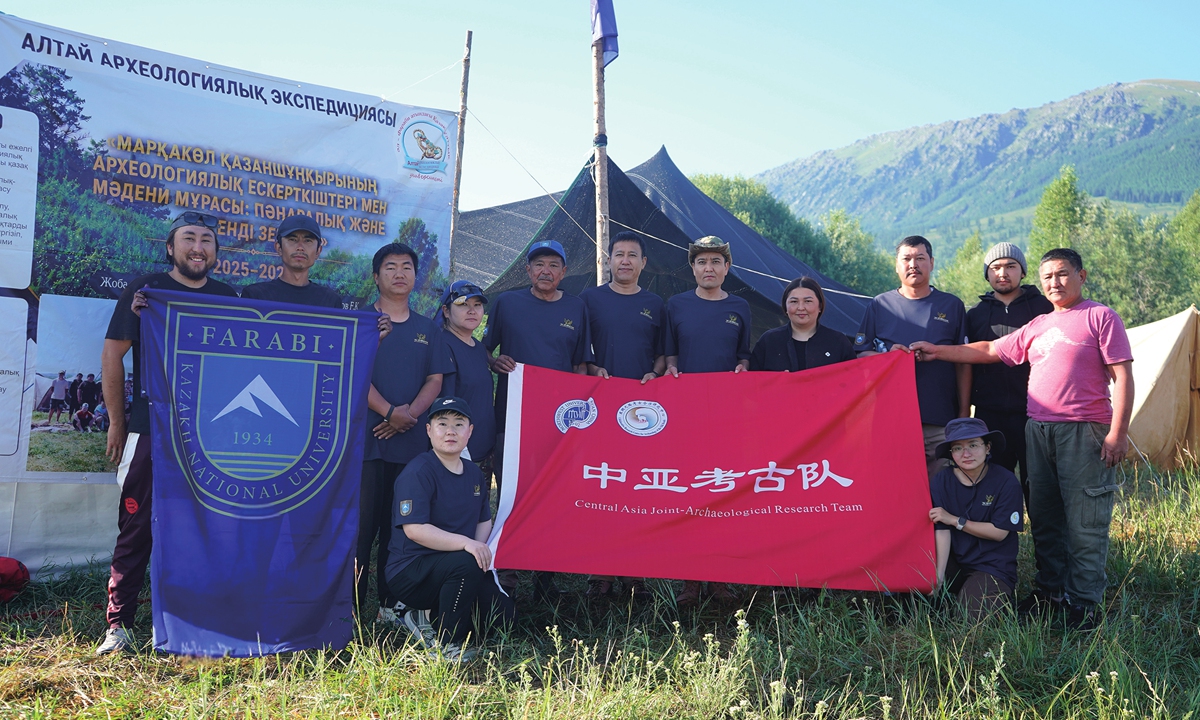
Members of the China-Kazakhstan joint archaeological project pose for a photo. Photo: Collaborative Research Center for Archaeology of the Silk Roads
China is set to launch its first joint archaeological project in South America, following an agreement between Chinese and Peruvian institutions to study the ancient Caral civilization. The move marks a new milestone in the country's growing overseas archaeological cooperation.
The Institute of Archaeology of the Chinese Academy of Social Sciences, Peru's Caral Archaeological Zone under the Ministry of Culture, and the Professional School of Archaeology at the National University of San Marcos signed a cooperation agreement on Saturday to conduct research on the ancient Caral civilization.
The Caral civilization, which is considered to be the oldest civilization discovered in the Americas, emerged along Peru's northern coast and dates to around 3000 BC to about 1800 BC.
The project marks China's first joint archaeological initiative in South America, expanding its overseas archaeological footprint to four continents: Asia, Africa, Europe and South America. It also encompasses cooperation with Belt and Road partner countries, major centers of ancient civilizations and regions crucial to the study of human origins.
For Chinese archaeologists, the project represents a new step in overseas archaeological engagement and international cooperation, fostering mutual learning and dialogue among civilizations, Chinese experts said.
Cooperation beyond borders
In recent years, Chinese institutions have participated in a series of overseas archaeological projects, from exploring ancient cities along the Silk Road to studying early civilizations in Africa and Central Asia.
They not only brought Chinese expertise and talent, but also advanced Chinese technologies, equipment and solutions, experts said.
In February, a significant archaeological breakthrough has emerged from Mit Rahina in Giza, the site of ancient Memphis in Egypt, where a joint Chinese-Egyptian mission has uncovered a limestone structure believed to be connected to the temple of King Pharaoh Apries from Egypt's 26th Dynasty (664-525 BC), according to the Xinhua News Agency.
Zhang Hai, head of the Chinese team and an archaeologist from Peking University, told the Global Times in a previous interview that the Chinese contingent applied distinctive methods for documenting and recording finds, while deploying Chinese-developed technologies such as the "4D kankan Meta" 3D scanner for precise, real-time topographic and sectional modeling, plus specialized software for capturing dislocated stone elements in 3D to aid future digital restoration and preservation.
In the latest China-Kazakhstan joint archaeological project, Chinese equipment and technologies played an important role in the team's discoveries.
Building on the excavation, the archaeological team used drones and the "I Survey" mobile field documentation system to conduct systematic surveys around the excavation area. The survey covered more than 10 burial grounds and documented more than 50 Pazyryk-era tombs.
Pazyryk culture flourished from the late sixth century BC to the third century BC, Shao Huiqiu, a professor at the Collaborative Research Center for Archaeology of the Silk Roads, Northwest University, told the Global Times.
According to Shao, who is the Chinese lead for the China-Kazakhstan joint archaeological project, none of the tombs had previously undergone formal excavation, giving them significant research potential. The use of these technologies has enabled the team to carry out more efficient and comprehensive surveys of the area,
During the China-Kazakhstan joint archaeological project, archaeologists have recovered a number of important artifacts, including human remains, pottery, gold foil pieces, horse bones and iron horse equipment.
The finds have provide valuable material evidence for studying the burial practices, funerary customs and material culture of the Pazyryk culture in the Lake Markakol region, said Shao.
Researchers also conducted regional surveys around the excavation area, documenting more than 50 Pazyryk-era tombs.
Through the joint archaeological project, China and Kazakhstan have gained a deeper understanding of Bronze Age to Early Iron Age archaeological remains in the Lake Markakol basin, according to Shao.
In 2027, the two sides will continue excavations at key sites and burial grounds identified during the survey, while advancing regional archaeological investigations, data analysis, multidisciplinary research, young archaeologist training and academic exchanges.
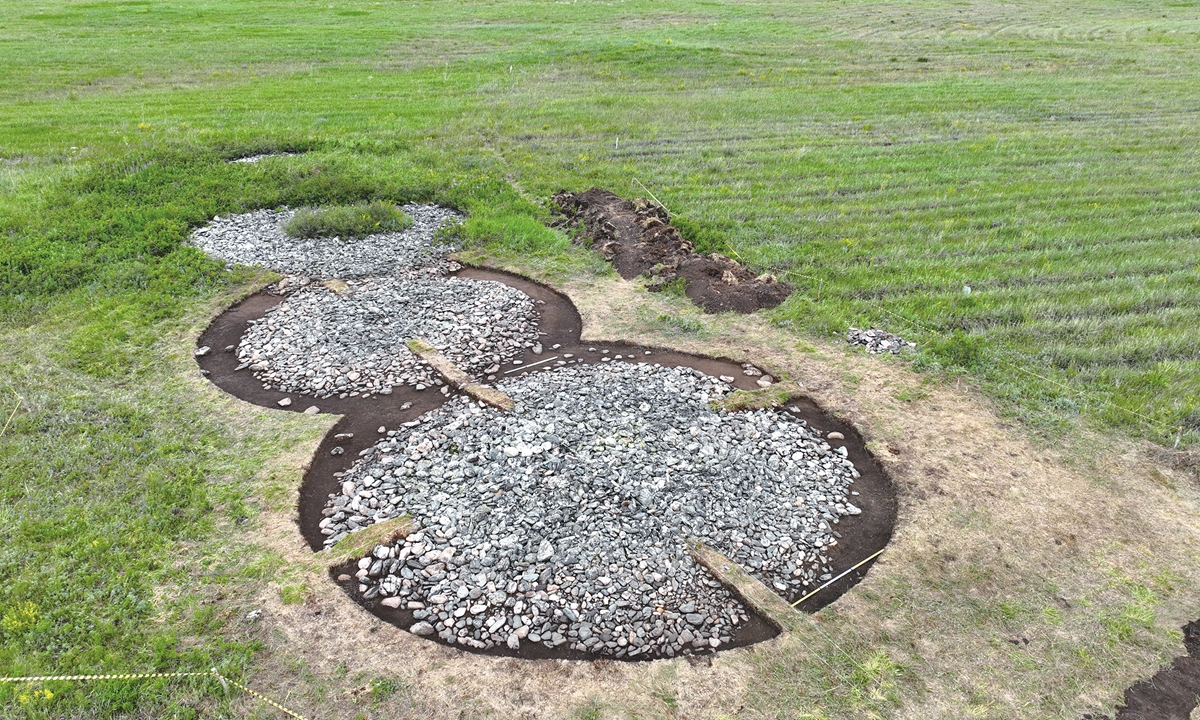
A tomb uncovered by the China-Kazakhstan joint archaeological team Photo: Collaborative Research Center for Archaeology of the Silk Roads
Archaeological exchangesChina's overseas archaeological cooperation has also become a platform for broader exchanges among researchers and civilizations.
Such projects, experts say, are helping expand archaeological research beyond national borders and provide new perspectives on exchanges among ancient civilizations.
China's overseas archaeology has grown alongside its broader participation in global cultural heritage protection.
The National Cultural Heritage Administration's cultural heritage development plan through 2030 calls for expanded archaeological cooperation in Austronesian-speaking regions, trans-Himalayan areas, and routes connected to the Silk Road and Maritime Silk Road, reported Xinhua.
The plan seeks to strengthen the methods used to trace Chinese cultural artifacts overseas, and advance efforts to retrieve lost cultural relics.
It also pushes for greater Chinese participation in global cultural heritage governance and expanded international partnerships, including new protection cooperation agreements with more countries worldwide, according to Xinhua.
In these joint collaborations, researchers from different countries bring together their expertise in regional archaeology and fieldwork, conducting exchanges on archaeological surveys, excavations, multidisciplinary research and regional cultural studies. Such cooperation has strengthened mutual learning and laid a foundation for long-term partnerships, according to Shao.
The China-Uzbekistan cooperation has established research centers in Samarkand and Termez to support studies on human-environment interactions and cultural heritage. The initiative has also trained professionals in Silk Road archaeology, scientific research and heritage conservation through programs for Uzbek universities and research institutions, while promoting international academic exchanges to advance Silk Road heritage protection and cultural cooperation, noted Zhu Jiangsong, a member of the China-Uzbekistan joint archaeological team from the School of Cultural Heritage, Northwest University.
Through these partnerships, Chinese archaeologists are not only contributing technology, research experience and training, but also gaining first-hand materials and fresh perspectives that help advance the study of ancient civilizations and enrich China's archaeological research.
。 Following Hamas' attack on Israel, the United States has sent a clear message of deterrence to prevent the conflict from spreading.To "anyone thinking of taking advantage of this situation," President Joe Biden said during an address on Tuesday, "I have one word: Don't."The rhetoric has since been repeated by others in the administration, with National Security Advisor Jake Sullivan telling reporters that they believe militia groups across the region "pose an urgent threat" and could "choose to try to exploit" the situation.
On ABC News Live at 8:30 p.m. on Thursday, Oct. 12, ABC News' James Longman, Matt Gutman and Ian Pannell look at the horrendous toll from Hamas' massacre, the Israelis and Palestinians caught in the middle and what comes next."We have been sending clear warnings that doing so will result in a firm response and consequences from the United States," Sullivan said Tuesday.National Security Council spokesman John Kirby told reporters Wednesday there's a "long list of actors in the region that are hostile to Israel," including Hezbollah, the Iran-backed Lebanese militant group.The administration has also offered its full support to Israel, with Defense Secretary Lloyd Austin telling reporters in Brussels on Thursday that the U.S. is not placing conditions on the military aid it's providing to Israel. The U.S. additionally moved a carrier strike group into the eastern Mediterranean as part of its deterrence measures."We're sending a loud and clear message: The United States is ready to take action should any actor hostile to Israel consider trying to escalate or widen this war," Kirby said Wednesday.How impactful those gestures will be on the raging war remains uncertain. The U.S. has limited leverage in the region, though does need to be careful to not further escalate the conflict, foreign policy experts said. The Biden administration is also likely keen to not get heavily involved, experts said."If Hezbollah or the Islamic Revolutionary Guard Corps or some other militant group from a neighboring country decides to get involved and attack Israel at this time, I don't think the United States is going to do anything more than it's currently doing -- which is offering Israel whatever it needs to defend itself," Ralph Carter, a professor of political science at Texas Christian University, told ABC News.Biden has historically been "cautious" in sending U.S. troops into battle, Carter said. "His experience in Washington over 40 years or more suggests that once you start something like that, you have no idea where it's going to end."Kirby said Thursday that there are no active plans or intentions to send U.S. troops to join a potential ground war in Israel and Gaza. The U.S. has deployed its largest carrier group, the USS Gerald R. Ford, to the region as an act of deterrence, officials said."The United States has moved military assets in the region, but I really do find it doubtful that the Biden administration really wants to get heavily involved militarily," Russell Lucas, a professor of international relations and global studies at Michigan State University, told ABC News.Israel's powerful military is also capable of defending itself against Hamas and other militant groups, experts noted, which may limit what it needs from the U.S. and act as another deterrent."The requirements on the U.S. defense industry I think are maybe not as heavy as they might be if we were talking about a weaker ally," Adria Lawrence, the Aronson Associate Professor of International Studies and Political Science at Johns Hopkins University, said during a public briefing on the conflict.In recent days there have been some limited military engagements on Israel's northern border with Lebanon, though Hezbollah may be deterred from getting drawn into a larger conflict with Israel, experts said."They will pay dearly for entering the conflict," Lucas said. "I think most actors [in the region] know that at the end of the day, the most military-capable actor is Israel, so there is a deterrence factor."Given Israel's known military prowess, the Biden administration's rhetoric may be stronger than necessary, Lucas said."I think it's more the Biden administration is aiming especially at the domestic audience -- trying to reassert that kind of bully pulpit of the commander-in-chief role, especially in the face of perhaps critiques from the Republican Party that Biden isn't strong enough," he said.At the same time, the U.S. does need to be careful about making any threats, experts said."Words matter and if President Biden's making a commitment and making kind of an implicit threat, he needs to remember the risks that are inherent in making a red line," Lucas said. "President Obama's red line in Syria -- do not use chemical weapons -- that was then not followed up was viewed as one of Obama's biggest foreign policy failures."Sarah Parkinson, the Aronson Assistant Professor of Political Science and International Studies at JHU, said during the university's briefing that these comments by U.S. officials "will likely embolden extremists on both sides" and prolong the conflict.Following Biden's remarks, Hezbollah said they will not back down and are "ready for confrontation," while the top leader of the Islamist armed organization Houthis in Yemen said that if the U.S. intervenes militarily in Gaza, they will send munitions and fighters to support Hamas.In efforts to deescalate the conflict, the U.S. could help mobilize other countries in the region, according to James Steinberg, the dean of the School of Advanced International Studies at JHU and former Deputy Secretary of State during the Obama administration."It's not that the United States itself is going to broker a resolution of this, but it can engage others, all of whom have a stake in not seeing the situation escalate," Steinberg said during the university's briefing, noting the discussions that have been taking place between the U.S. and Saudi Arabia, the UAE and others.Secretary of State Antony Blinken told reporters Thursday at a press conference in Israel that they are working with their partners in the region to ensure "that there will not be a second front or a third front."Steinberg said a wider war "can't be ruled out," and the effectiveness of the U.S.' response to deescalate is "uncertain" -- likening it to its support of Israel in 1973 during the Yom Kippur War."Here as then, the United States has limited impact and limited leverage," he said. "Perhaps even less so today than it did in 1973."。
Current article:http://6n7sxd.yofateeikengyeche.cfd/news/20260826_5851692.html
Published on:13:29:15





 发表于 07:38:24
 QQ好友和群
 QQ空间
QQ空间 腾讯微博
腾讯微博 腾讯朋友
腾讯朋友 收藏
收藏 支持
支持 反对
反对
 发表于 09:23:08


